Renovation Guide
Insulation Rebates in Ontario: What Qualifies, and When to Do the Work
Insulation is one of the measures the Ontario Home Renovation Savings Program actually pays for — unlike the kitchen or bathroom most people are searching for when they find that program. The catch is that most insulation lives behind a finished surface, so what the job costs you depends almost entirely on whether that surface is already coming off. This page is about that timing, and about the assessment order that decides whether the claim survives at all.
General information based on our experience running renovation projects across Toronto and the GTA — not regulatory or financial advice, and not an energy assessment. Rebate amounts and eligibility are set by the program and have been revised since launch, so confirm current details on the official Ontario program page before committing money.
What the rebate is actually attached to
Insulation is one of the core measures under the Ontario Home Renovation Savings Program, the provincial energy-efficiency program delivered through Save on Energy. Air sealing usually travels with it, because insulation without air sealing leaves you paying to warm air that is on its way out through the gaps.
The thing homeowners get wrong is assuming the rebate is attached to the material. It is not. It is attached to a measured improvement, verified by an energy advisor, documented with invoices and product specs. Buying batts and stapling them up yourself is a fine thing to do and it is not the same thing as a rebated retrofit.
- Rebate values, the measure list, and eligibility rules are set by the program and have been revised since it launched in January 2025.
- Several insulation measures require a pre-retrofit home energy assessment before any work starts.
- Money comes back after the work is finished and the paperwork is in, not upfront.
- The rebate is registered to the homeowner, not to the contractor doing the installation.
We have deliberately printed no dollar figures on this page. Any number we quoted would be out of date within a quarter, and budgeting off a stale blog post is how people end up short. Confirm current amounts on the official program page.
Where insulation goes, and what each location costs you in access
Every insulation job is really two jobs: the insulation, and getting to it. The material is cheap. The demolition and reinstatement around it are not. That is the whole reason timing matters more here than on almost any other retrofit.
| Where | When it is cheap to do | Notes |
|---|---|---|
| Attic | Independent of the rest of the job | The one insulation location you can do at any point without tearing anything apart. Hatch access, blow it in, done in a day on most houses. If you only ever do one measure, this is the one. |
| Exterior walls | Only sensible with the drywall off | As a standalone job it means demolishing finished walls, then re-drywalling, taping, priming and painting. During a gut renovation the wall is already open and the reinstatement is already in the budget. |
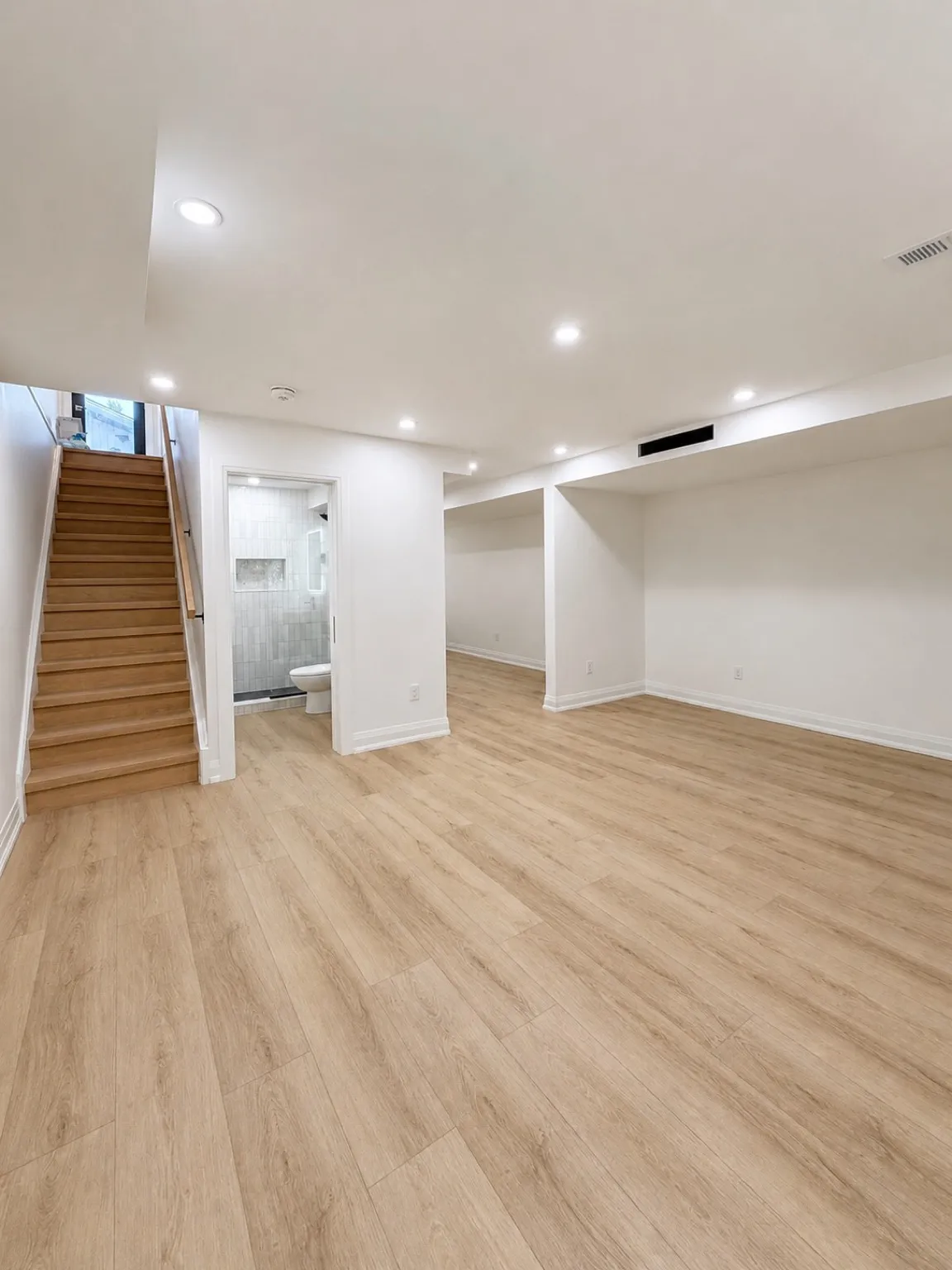
| Basement walls | Before framing and drywall go back on | Rigid foam or spray foam against the foundation wall, then the stud wall in front of it. Once the basement is finished, redoing this means undoing the finishing. |
| Rim joist / header | While the basement ceiling is open | The band of framing where the floor meets the foundation. Small area, disproportionate air leakage, trivial to seal while it is exposed and awkward once a ceiling is up. |
| Crawl space | Any time, but unpleasant | Usually paired with a vapour barrier. Worth doing on its own schedule because nothing else in a renovation gates it. |
| Cathedral ceilings & flat roofs | With the ceiling open, or from the roof | The hardest one to retrofit. If a ceiling is coming down anyway for pot lights or a structural change, that is the moment. |
The sequencing rule that decides whether this is cheap or expensive
Insulating an exterior wall as a standalone project means demolishing drywall you are otherwise happy with, insulating, then rebuilding the wall — new board, tape, mud, sand, prime, paint, and reinstalled trim. On a main floor that is a serious job with a serious price and a house full of dust.
Insulating the same wall during a full home renovation, when the drywall is already off for wiring and plumbing and the reinstatement is already a line in the budget, costs a fraction of that. Nothing about the insulation changed. What changed is who is paying for the access.
This is the single most useful thing a renovation contractor can tell you about the program, and it is why we raise it during design rather than after demolition.
- Decide on insulation during design, before the scope is locked.
- If the walls are coming off in three rooms, price insulating those three rooms while they are open, not later.
- A basement being finished is the last easy moment to insulate the foundation wall and seal the rim joist.
- Attic work is the exception — it does not depend on the rest of the renovation, so it can happen on its own schedule.
- Whatever the plan, the pre-retrofit assessment still has to come first for the measures that require one.
A retrofit that would never justify its own demolition cost becomes cheap when someone else has already opened the wall. That is the arbitrage, and it only exists during the renovation window.
What we do and what we do not
To be plain about the division of labour, because it matters for who you call.
Osoba Renos & Design installs insulation and air sealing as part of the renovations we run — gut renovations, basement finishing, additions, anything where the assembly is already open. We are a renovation contractor, not a registered energy advisor and not an HVAC company. We do not perform the home energy assessment, we do not issue the report the rebate is calculated from, and we do not install heat pumps.
- We insulate and air-seal what our own scope opens up, to the spec the drawings call for.
- We flag, at design stage, which assemblies are about to be closed up and are worth insulating now.
- We keep invoices and product spec sheets for the work we perform, which is what a claim needs.
- The energy assessment is booked with a registered energy advisor, separately from us.
- Heat pumps, windows supplied under the program, and solar are other trades. Ask us and we will say so rather than quoting work we do not do.
Agree in writing, before work starts, who books the assessments and who holds the documentation. It is one clause and it prevents an expensive argument at claim time.
Where this fits in the rest of the job
The assessment side of this — who books it, what happens on the visit, and the order that keeps a claim intact — is covered in our guide to the home energy assessment in Ontario. If you want the whole program rather than this one measure, start with what the program covers and what it does not.
On the build side: basement wall and rim-joist insulation goes in during a basement renovation, exterior wall insulation during a full home renovation, and if the energy side is the point of the project rather than a bonus, see energy-efficient home renovation in Toronto.
People also ask
Is there an insulation rebate in Ontario?
Do I need an energy assessment before insulating?
Can I get a rebate for insulation I install myself?
Does finishing my basement qualify for the rebate?
Is attic insulation worth doing on its own?
Do you install insulation as part of a renovation?
Next step
Walls coming off anyway? Let's price the insulation while they are open
Reach out today for a free, no-pressure in-home estimate — and a clear, written project plan.