Renovation Guide
Ontario Home Renovation Savings Program: What It Covers (2026 Guide)
The Ontario Home Renovation Savings Program pays for energy retrofits — insulation, air sealing, windows, heat pumps — and not for the renovation most people mean when they search for it. That is worth knowing before you build a budget around it. What the program is genuinely good for: making retrofits cheap when you are already opening walls for a full home renovation. This guide covers what qualifies, what does not, the assessment order that determines whether your claim survives, and how to sequence both jobs together.
General information based on our experience running renovation projects across Toronto and the GTA — not regulatory or financial advice. Rebate amounts and eligibility rules are set by the program and have been revised since launch, so confirm current details on the official Ontario program page before committing money.
What qualifies and what does not
The measure list is the whole program. If something is not on it, no amount of framing it as a renovation makes it eligible.
| Measure | Eligible? | Notes |
|---|---|---|
| Attic, wall & basement insulation | Yes | One of the core measures. Cheapest to do while a wall or ceiling is already open for other work. |
| Air sealing | Yes | Usually paired with insulation and verified by a blower-door test at the post-retrofit assessment. |
| Windows & exterior doors | Yes | Replacement with qualifying energy-rated units. Per-opening rebates, so a whole-house window replacement adds up. |
| Air-source & ground-source heat pumps | Yes | The largest rebates in the program. Ground-source is a much bigger install than air-source and priced accordingly. |
| Smart thermostats | Yes | Small rebate, low effort, often bundled with a heat pump install. |
| Rooftop solar & battery storage | Yes | Added to the program alongside the envelope and heating measures. |
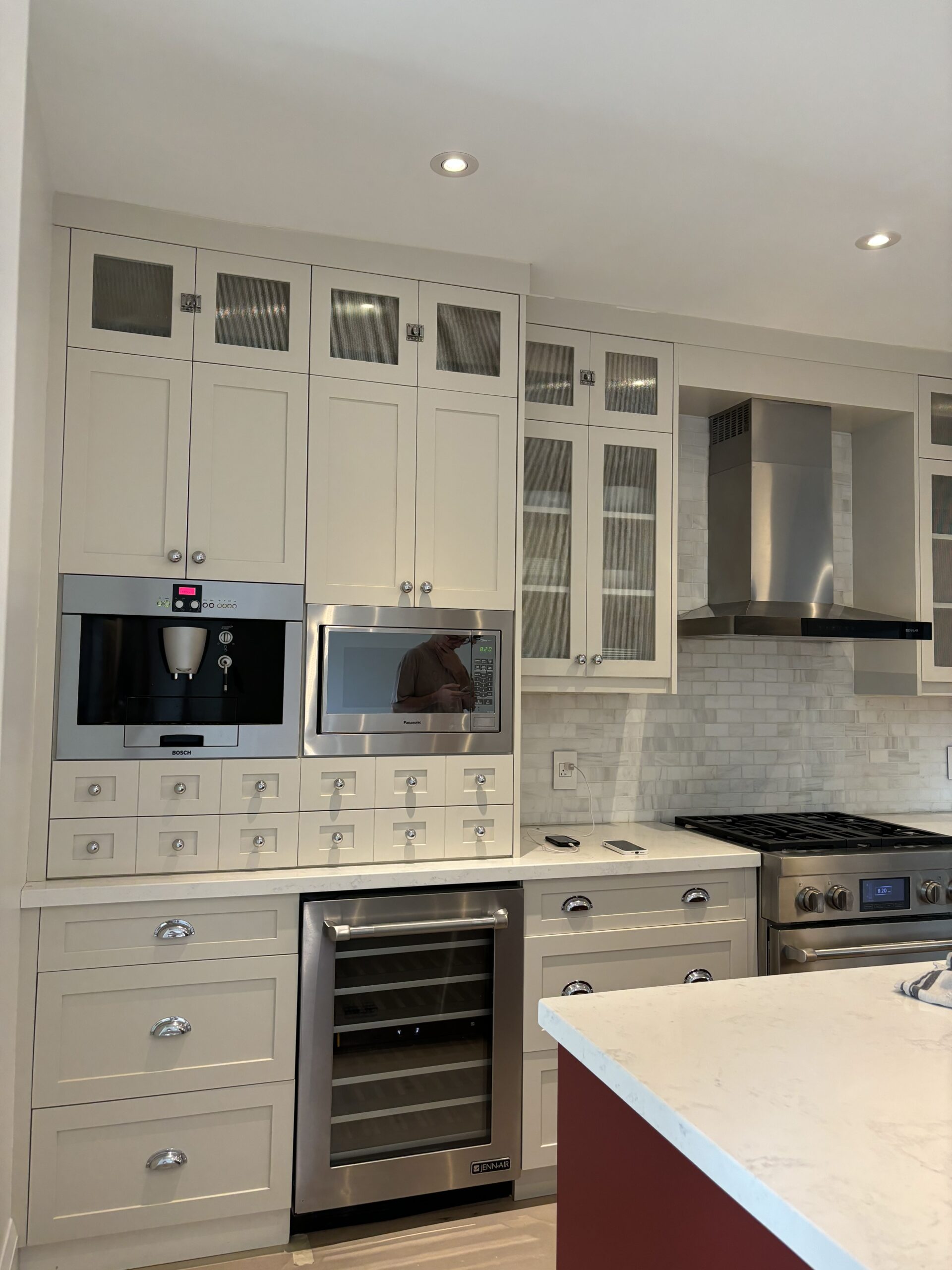
| Kitchen renovation | No | Cabinetry, counters, backsplash, and appliances are not energy retrofits. Nothing in a kitchen rebuild qualifies on its own. |
| Bathroom renovation | No | Tile, vanities, fixtures, and glass are outside the program entirely. |
| Basement finishing | Partly | Finishing the space does not qualify. The basement wall or rim-joist insulation you install as part of it can. |
| Flooring, paint & trim | No | Cosmetic work. Not eligible under any measure. |
Measure lists and rebate values are set by the program and have changed since January 2025. Treat this table as the shape of the program, and the official program page as the authority on current amounts and eligibility.
What the Ontario Home Renovation Savings Program actually is
The Ontario Home Renovation Savings Program (HRSP) launched in January 2025. It is funded by the Government of Ontario and delivered through Save on Energy, the Independent Electricity System Operator's conservation program, in partnership with Enbridge Gas. Despite the name, it is an energy-efficiency rebate program, not a general renovation subsidy.
That distinction matters more than anything else on this page. The word "renovation" in the title sends a lot of homeowners looking for help with a kitchen or a bathroom, and there is none there. What the program pays for is a specific list of measures that reduce how much energy your house uses — insulation, air sealing, windows and doors, heat pumps, smart thermostats, rooftop solar, and battery storage.
- Eligibility is for homeowners of eligible Ontario homes — generally the home you own and live in, not an investment property you have never occupied.
- Rebates are paid after the work is complete and documentation is submitted, not upfront. You finance the work and get reimbursed.
- Several measures require a pre-retrofit home energy assessment before work starts and a post-retrofit assessment after. Doing the work first and applying later usually disqualifies those measures.
- Rebate amounts, measure lists, and eligibility rules have been revised since launch and are set by the program, not by your contractor.
Because the amounts and the measure list change, we have deliberately not printed dollar figures here — anything we quoted would be stale within a quarter. Confirm current values on the official program page before you budget around them.
Why the assessment order is the part people get wrong
The most common way homeowners lose money on this program is sequence, not eligibility. For measures that require a home energy assessment, the pre-retrofit assessment has to happen before the work is done. It establishes the baseline the rebate is calculated against.
Insulate the attic in June, book the assessment in August, and there is no baseline left to measure. The work was eligible; the claim is not. There is no retroactive fix for that, and the assessor cannot infer what was there before.
- Book the pre-retrofit assessment first, before any envelope work begins.
- Keep every invoice, product spec sheet, and energy rating label. Rebates are documentation-driven, and a missing spec sheet on a window order can hold up a whole claim.
- Confirm which specific measures on your list require an assessment and which do not — they are not treated identically.
- If you are renovating in phases, tell the assessor the full plan. A single baseline can often cover measures completed across several months.
If you are hiring a contractor for the renovation, agree in writing who is responsible for booking assessments and holding documentation. It is a small clause that prevents a five-figure argument later.
How to stack the program onto a renovation you are already doing
This is where the program is genuinely worth real money to someone mid-renovation, and it is the part almost nobody plans for. Most eligible measures are hidden behind finished surfaces. If those surfaces are already coming off for other reasons, the marginal cost of the retrofit collapses.
A concrete example from the kind of work we do. A full-home renovation in an older Etobicoke or North York house means drywall off in several rooms, floors up, and the attic accessible for pot-light wiring anyway. Insulating and air-sealing at that moment costs a fraction of what it costs as a standalone job, because the demolition, access, and reinstatement are already paid for by the renovation.
- Exterior wall insulation: only sensible while the drywall is already off. As a standalone job it means demolishing finished walls you just paid to build.
- Rim-joist air sealing: trivial while a basement is open to the studs, awkward and expensive once it is finished and drywalled.
- Windows: if the trim and casing are being replaced anyway, replacing the units at the same time saves a second round of interior finishing.
- Heat pump: worth deciding before electrical work is finalised, because it affects panel capacity and circuit planning.
- Attic insulation: independent of most interior renovation, so this one can be done any time — but do it before the assessment window closes on the rest.
The practical version: decide on the energy measures during design, not after the drywall is back up. Retrofits that would never justify their own demolition cost become cheap when someone else has already opened the wall.
What this program will not do for your kitchen or bathroom
To be direct about it, because the search results for this program are full of pages that are vague on the point: there is no Ontario rebate for a kitchen renovation, a bathroom renovation, new flooring, cabinetry, or finishing a basement. Those are not energy measures and they do not qualify under HRSP.
Two things do sometimes get conflated with it. Some municipalities and utilities run separate water-efficiency or stormwater programs that can touch a bathroom fixture or a downspout. And the federal government has run its own retrofit and heat-pump programs over the years, with eligibility that has changed repeatedly. Neither is the same thing as HRSP, and neither turns a kitchen rebuild into a rebated project.
- A kitchen renovation does not qualify — not the cabinetry, counters, backsplash, or appliances.
- A bathroom renovation does not qualify — not tile, vanities, fixtures, or glass.
- Finishing a basement does not qualify, though the insulation installed as part of it may.
- Check separately for municipal water-efficiency and basement-flooding subsidy programs, which run independently and have their own rules.
If your project is a kitchen or a bathroom, budget it on its own merits. Our pages on kitchen renovation cost and bathroom renovation set out what those actually run in Toronto and the GTA in 2026.
A realistic sequence if you are doing both
Putting it together, here is the order that keeps both the renovation and the rebate claim intact.
- Design phase — decide which energy measures you want, before scope is locked and before anything is demolished.
- Confirm current eligibility and rebate amounts on the official program page. Do not budget off a blog post, including this one.
- Book the pre-retrofit home energy assessment for the measures that require one. This gates everything after it.
- Agree in writing with your contractor who books assessments, who holds documentation, and who submits the claim.
- Build. Sequence envelope work to happen while walls, floors, and ceilings are already open.
- Book the post-retrofit assessment and submit the claim with invoices and spec sheets attached.
Done in that order, the rebate is a discount on work you were doing anyway. Done in the wrong order, it is a claim that gets rejected on a technicality after the money is already spent.
Go deeper on one part of it
Two parts of this program are worth their own page, because they are where the money and the mistakes actually are.
- Insulation rebates in Ontario — where insulation goes in a house, which locations are only affordable while a wall is already open, and what the rebate is actually attached to.
- The home energy assessment — what the pre- and post-retrofit visits involve, where they sit in a build schedule, and the ordering mistake that sinks the whole claim.
- Energy-efficient home renovation in Toronto — how we scope insulation and air sealing into a renovation, and where our work stops.
If your project is not an energy retrofit
Budget it on its own numbers. A kitchen renovation in Toronto and the GTA typically runs $25,000–$50,000, and a bathroom renovation $12,000–$20,000. Neither is rebated. If you want the actual lever on renovation cost, it is scope discipline and not moving plumbing — see how hiring one renovation company saves money and how to vet a renovation contractor.
People also ask
What is the Ontario Home Renovation Savings Program?
Does the Ontario Home Renovation Savings Program cover kitchen or bathroom renovations?
Do I need a home energy assessment before starting work?
How much can I get back from the program?
Can my renovation contractor apply for the rebate on my behalf?
Is this the same as the federal Greener Homes program?
Next step
Renovating anyway? Let's sequence the retrofits while the walls are open
Reach out today for a free, no-pressure in-home estimate — and a clear, written project plan.